One-to-One Executive Coaching for Senior Professionals and Executives
The ones who stay at the top are the ones who keep a coach
Should senior talent really be the one exception? As Japan's employment structure shifts beneath everyone, that question matters more than ever.
Sumiko Champion Executive Coaching is one-to-one coaching for senior professionals and executives. It carries their experience and judgment forward into a clear, coherent next chapter — and where needed, connects directly to your organisation's structural succession challenges and strategic branding.
Japan's employment model is reaching the limits of what the old approach can handle
The Membership-Type Model
Primary driver of valueTitle, tenure, loyalty
Where action startsWaiting for direction from the organisation
Relationship to riskPreserving the status quo
Relationship to changeA threat to one's own identity
The Shift to Job-Type
Primary driver of valueProven ability, opportunity to deliver results
Where action startsFinding problems and acting on your own initiative
Relationship to riskTurning experience into new contribution
Relationship to changeA practical opportunity to redefine and re-apply what you've built
What makes this shift real isn't a new policy. It's a conversation that puts judgment into words and turns it into the next contribution — that's coaching.
Why Coaching
The answer starts by turning experience and judgment into words that move people
Most of an organisation's knowledge sits unspoken, asleep inside individual people. This isn't a problem for any one department to solve.
Manuals can pass on procedure. Training can pass on knowledge and organisational intent. But neither can draw out intrinsic motivation, or the reasoning behind judgment that lives inside one person's experience. Consulting and change frameworks can offer a model — but they can't manufacture a reason to believe in it.
Coaching is what awakens that reason and that intrinsic motivation. Drawing out the reasoning behind judgment, buried in experience, through questions — that is what actually moves change at its root.
50.1%
of Japanese companies (~138,000) have no successor in place
※Teikoku Databank, 2025
Coaching is one of the most effective levers for driving change
It reaches what training and policy alone cannot
※ICF/HCI, Building a Coaching Culture for Change Management, 2018
2x+
more likely for organisations with a strong coaching culture to be classified as high-performing (borne out across 3 meta-analyses covering thousands of data points)
※ICF/HCI / Cannon-Bowers et al., 2023
Read more ›
In one overseas case, the departure of roughly 700 senior staff was reported to have removed 27,000 years' worth of combined experience from the organisation at once (Harvard Business Review, a U.S. case). It isn't Japan-specific data, but the scale of what can be lost this way shows the problem isn't confined to one country or industry. Once meaning is found, putting it into words stops being a challenge and becomes a natural result. And judgment, once articulated, doesn't stop there — it becomes a genuine starting point for choosing what comes next, on one's own terms. That's exactly why we believe this particular gap can be reached by coaching — not consulting, not AI tools, not training.
You don't need to be taught. But it can be drawn out of you — that's coaching.
What Coaching Is
A dialogue that draws out the answer, rather than handing it over
"Partnering with clients in a thought-provoking and creative process that inspires them to maximise their personal and professional potential."
— The International Coaching Federation's (ICF) official definition of coaching
An Equal Partnership
The expert on your own life is you. The coach doesn't hand over answers — they support the process of drawing them out.
Future- and Action-Focused
Rather than diagnosing past problems, coach and client build the goals and solutions ahead of them together.
Drawing Out Potential
It works with the creativity, experience, and self-direction already inside the person — not something supplied from outside.
Accompaniment and Accountability
Through regular dialogue, it supports the person in holding onto their own commitment toward measurable results.
Primary Focus
Core Method
Role
Coaching
Growth and future possibility
Ask questions, draw out the person's own answers
Equal partner, companion
Consulting
Problem-solving and strategy
Diagnose the issue, deliver expert recommendations
Expert
Training
Skill acquisition and education
Teach a defined curriculum, transfer knowledge
Teacher, instructor
Mentoring
Career direction and advice
Share one's own experience, wisdom, and advice
Senior guide
Therapy
Healing and recovery
Address past experience, work with emotional state
Clinician, practitioner
A consultant hands you a map. A coach builds your own ability to choose the road.
Training tells you what you need to know. Coaching helps you discover how to use it, on your own.
A mentor says, "follow my way." A coach asks, "define your own."
80%
reported greater self-confidence
73%
reported improved relationships
72%
reported improved communication skills
67%
reported improved work-life balance
※From the ICF Global Coaching Client Study (2009) — international research on coaching in general, not a measure of outcomes specific to Japan or to this program.
Why Senior Talent
Investing in what can never be recovered twice
Developing junior talent is an investment in future potential. Investing in senior talent is a different kind of investment entirely — one where already-proven judgment, which is lost for good the moment that person leaves the organisation, can only be captured right now, in this moment. There will be another chance to develop junior talent next year. There is no second chance to capture the particular judgment a senior person has built over time — it's gone permanently the instant they leave.
The power to move this organisation already exists inside these people. It should be directed toward the next generation before it's lost.
Senior talent has built, over years of results, real influence within the organisation — alongside their judgment, the actual ability to move things forward.
Will you capture it now? Or will you lose it?
Methodology
Not a farewell gift — a three-phase process for building what's next
I.
Inventory
What strengths, values, and experience still apply now? The starting point isn't what's being lost — it's the asset already built through years of experience and skill.
→
II.
Realignment
Which assumptions no longer serve the contribution ahead? Before moving into the next chapter, we dig into which beliefs are actually worth reconsidering.
→
III.
Reorientation
How does the inner compass align with that contribution? This process doesn't end with closure — it ends by pointing toward a direction.
You are not losing yourself. You have grown beyond who you were.
Outcomes
What actually changes after this program
Phase
Common state before the program
State after the program
Inventory
An unexamined assumption that one's value is tied to title or position
Able to articulate, in their own words, the strengths, judgment, and experience that remain even after leaving the role
Realignment
A vague anxiety that "the organisation may no longer need me," or a fixation on preserving the status quo
Has consciously chosen, in their own words, which assumptions to release and which strengths to redirect toward the next contribution
Reorientation
A one-directional view that departure or retirement equals an ending
Holds a concrete action plan for the shape of their next contribution
Illustrative Case (Hypothetical Scenario)
※Not a real company or individual — a hypothetical example illustrating the program's range.
The scenarios below illustrate the kind of outcomes that can emerge when coaching is combined with an organisational project, where relevant.
Case 1: Internal contribution before departure (a direct operational result)
An IT infrastructure executive systematised operating standards before retirement, and developed five next-generation leaders.
Read more ›
A systems integrator with roughly 1,000 employees. A 61-year-old information systems executive, facing retirement at 63. Within the Full Transition framework, during the Realignment phase, he released the assumption that "my judgment comes from years of experience and instinct, and can't be put into words," and led an internal project to systematise his accumulated decision-making standards for incident response and operations into a practical manual for the next generation of IT operations leaders. Over the six months before his departure, he completed hands-on training for five next-generation leaders, leaving behind both a standardised operating process and a trained successor cohort by the time he left.
Case 2: Continuing on as a technical advisor
A technical executive officer continued a monthly advisory relationship after stepping down from his role.
Read more ›
A manufacturing company with roughly 600 employees. A 63-year-old technical executive officer, facing role departure at 65. During the Inventory phase, he released the assumption that "decision-making authority is what makes me valuable," and recognised instead that his real strength was "the judgment to quickly map a path to resolution from past cases." A three-way agreement was reached for him to continue as a technical advisor once a month after stepping down.
Case 3: A next chapter contributing to regional challenges
An infrastructure executive built a plan to advise on a regional project after departure.
Read more ›
An infrastructure-related company with roughly 1,200 employees. A 62-year-old executive officer had spent years coordinating regional infrastructure and environmental issues. During the Realignment phase, he released the assumption that "influence disappears the moment you leave the role," shifting instead toward "the coordination skill and trust I've built can be applied directly to solving regional challenges." After departure, he built a plan to be involved as an advisor at the concept stage of a regional project coordinated with local government and related organisations (e.g. supporting the launch of a community-based care hub). The HR summary explicitly documented how this contribution fits into the company's narrative around regional contribution and human capital disclosure.
For Organisations
What this means for your company
A successful transition for senior professionals and executives facing departure
The three-phase methodology, delivered one-to-one, produces a clear, meaningful, and coherent next chapter for the person involved.
Succession and strategic talent development
Creates the organisation's most valuable window of contribution during the time remaining before departure.
Stronger branding
Prepares each person's "next chapter" not just as words, but as something ready to become real action and real projects.
What the coaching does: Following a three-phase methodology — Inventory, Realignment, Reorientation — it works one-to-one to carry the person's experience and judgment forward into their next contribution. Six sessions of executive coaching, aligned with international coaching standards.
A company is its people — people are the keystone that holds it up. It's only when each individual can claim their own meaning and move forward on their own initiative that an organisation truly moves forward.
Founder
The perspective behind this methodology
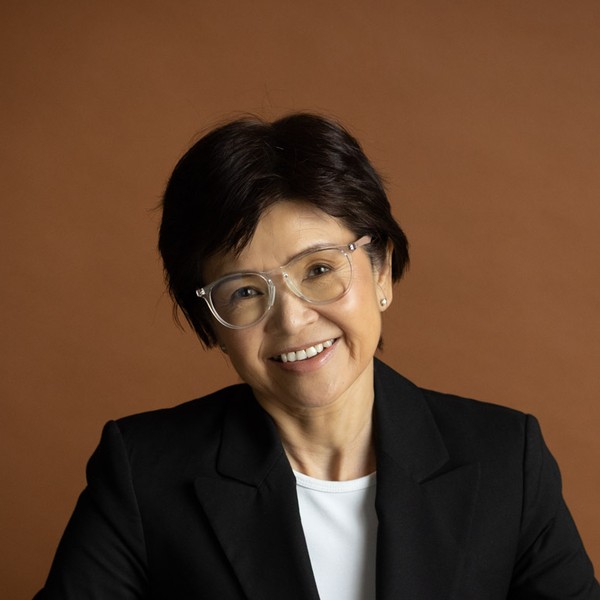
Sumiko Champion
Founder
Sumiko Champion Executive Coaching was founded by Sumiko Champion, a bilingual executive coach with over 1,000 hours of coaching experience across Japan and Australia.
After graduating from Waseda University, she spent over a decade as an associate lecturer and tutor in Japanese at Macquarie University alongside her coaching practice — building a career at the intersection of two entirely different professional cultures: one where identity centres on title and position, and one where it doesn't.
Sumiko Champion Executive Coaching is a methodology grounded in evidence and proven results. At a moment when a life — or a company, or society as a whole — reaches a crossroads, it guides each person involved toward genuine confidence in their own significance, toward rediscovering the strengths they've built, and toward the behavioural change that leads to further contribution and growth.
ICF ACC CredentialMBTI Certified PractitionerGraduate Diploma in ManagementGraduate Diploma in Counselling
An unshakeable sense of self is the keystone that sustains lasting change.
This methodology wasn't borrowed from an existing template or license. It was built specifically for the exact moment Japanese organisations are facing right now, in the shift from membership-type to job-type employment. It's a perspective that could only come from moving between two professional cultures — Japan and Australia — combined with over 1,000 hours of real coaching practice.
From founder Sumiko Champion: if your organisation might be a fit for this work, I'd welcome the chance to talk first.
FAQ
Questions worth asking before the first conversation
How is this different from outplacement services?+
Outplacement is typically a per-employee service focused on speed of placement into a new job after departure. Sumiko Champion Executive Coaching isn't aiming to find the next job. It's a structured methodology delivered before departure, working with each individual to reach a genuine reorientation. Together, we work out what final contribution they'll leave the organisation with before they go, and what form their contribution takes afterward. It also differs in being able to propose a program that coordinates with a successor or related departments.
Can I use this service as an individual?+
Yes, absolutely. Beyond organisation-sponsored engagements, individual applications are welcome too — whether through your company's self-development support programme, or by applying directly on your own decision. For pricing details, please see the "Pricing" FAQ below.
Why does this need to come from outside, rather than internal HR?+
The biggest reason to engage Sumiko Champion Executive Coaching is the ICF (International Coaching Federation) credential at the core of executive coaching — expertise verified against a global standard. ICF credential holders in Japan represent only around 2% of credential holders worldwide, making this expertise genuinely rare within Japan.(※Estimate based on ICF Japan Chapter data as of February 2024; confirmed July 2026.)
Continuing with the same structure produces the same results. What Sumiko Champion Executive Coaching provides is a dialogue methodology designed around ICF standards. It doesn't replace existing HR functions — it's expertise that structurally doesn't exist inside the company at all.
And being able to offer time and space where the person can focus on honest dialogue without worrying about evaluation or office relationships is itself a major factor supporting genuine change from within.
What's the pricing structure?+
The core offer is straightforward one-to-one executive coaching for a single senior professional or executive. It's provided as a six-session package, priced purely for the coaching itself (an independent pricing structure that doesn't assume any organisational project).
Coaching Package
Price
6 Sessions
¥480,000
Early-Booking Rate (limited time)
¥384,000
Can be used through your company's self-development support programme, or applied for individually.
For organisations wanting a project that also includes handoff to a successor and coordination across the wider organisation, we separately offer cohort-based organisational programmes (Foundation / Full Transition), priced apart from individual coaching.
Foundation
Full Transition
Coaching sessions
8 sessions
10 sessions
Small cohort (up to 4 people)
¥2,600,000
¥3,120,000
Large cohort (up to 8 people)
¥5,200,000
¥6,240,000
Early-booking rate (limited time): 20% off any of the prices above. ※Pricing is calculated based on session count and number of participants — Foundation represents roughly ¥650,000, and Full Transition roughly ¥780,000, per person. Travel expenses for kickoff and similar in-person elements are quoted separately. We recommend starting with individual coaching first, then discussing an organisational programme if it becomes relevant.
What are Foundation and Full Transition, exactly?+
These are organisation-facing engagements built around coaching at their core, run side-by-side with your company. They run in parallel with the individual's three-phase methodology, bringing in a successor or team at the appropriate stage. What the focus becomes — successor handoff, team co-creation, or cultural continuity — is something your organisation chooses.
Foundation covers the handoff period up to departure or retirement. Full Transition adds a longer-term relationship that continues after departure as well (such as an ongoing technical advisory role).
At completion, alongside the individual's own "next chapter" document, we deliver succession materials for the successor and a summary for HR. The value of this project is turning the time before departure into the organisation's most valuable window of contribution — not simply a farewell.
What's the actual difference between Foundation and Full Transition?+
Both are organisational projects, quoted separately from individual coaching. The biggest difference is the time horizon covered. Foundation covers the handoff period up to departure or retirement, structured across 8 sessions. Full Transition adds a longer-term relationship that continues after departure as well — such as an ongoing technical advisory role — structured across 10 sessions. Both also include bringing in the team or whoever is responsible for cultural continuity, and preparing a summary of outcomes suitable for sharing.
See more detail ›
How are outcomes confirmed?+
When a company is sponsoring the engagement, an optional preliminary meeting can be held beforehand between the individual and the company to loosely align on goals. This isn't required — it happens only if the individual wants it.
In every case, the actual content of coaching conversations remains completely confidential. The same confidentiality applies to the individual's goals and progress — check-ins on progress happen directly with the individual, one step at a time.
For individual applications, there's no goal alignment with a company — it's purely a personal reflection process for that individual.
For Foundation and Full Transition, we propose a draft set of evaluation metrics before the project begins, aligned to your organisation's needs. Those metrics are what the organisation uses to track change before and after (the content of individual conversations themselves is never disclosed without the person's consent).
Are sessions online or in person?+
Coaching itself is delivered entirely online.
This is by design — so the individual can engage at their own pace, without concern for who's watching, including outside standard work hours. For Foundation and Full Transition engagements, the project kickoff and any coordination with the organisation are held in person.
Is the individual offering actually coaching?+
Yes. It's genuine one-to-one executive coaching, delivered to international coaching standards. You can begin with this coaching alone, complete in itself. If you'd like successor handoff or wider organisational coordination, that can be discussed separately as an organisational programme.
Isn't coaching unnecessary for senior executives?+
In the US, coaching for executive-level leaders is widely adopted as a strategic tool. Executive coaching delivered by an ICF (International Coaching Federation) credentialed professional coach isn't instruction to compensate for a lack of ability. It's a dialogue that converts experience and strengths the person already holds into new value. Rather than handing over answers, it works through deep listening and questioning to organise thinking and surface assumptions and possibilities that weren't visible before. It's a confidential space for thinking, precisely because of the responsibility the person carries — and an investment in the future.
What happens after Foundation or Full Transition ends?+
The outcomes of the organisational project become the basis for considering a move to a broader cohort or an annual agreement. Pricing and scope for that next stage are set once actual results are in hand.
How long does the programme take?+
Coaching (6 sessions) typically runs over roughly 6 months. Organisational projects run roughly 4–6 months for Foundation, and 6–12 months for Full Transition. Both are guidelines and can flex depending on your circumstances.
Is confidentiality maintained? Does a manager see everything?+
The content of individual coaching conversations is never disclosed to a third party without the person's consent.
Can you work with companies that don't already have an Australia-Japan connection?+
Yes, absolutely. Sumiko Champion Executive Coaching actively works with companies that don't already have a specific Japan-Australia network. The programme is built on the founder's own coaching experience and insight, and designed around the social transition Japanese organisations are facing right now — not around any pre-existing bilateral relationship.
What is your privacy policy?+
Your basic contact information is stored in Notion (a cloud workspace platform certified to SOC 2 Type II and ISO 27001) to support communication and the operational running of our engagement. Coaching session content is not stored in this system unless you separately consent to it. We also use Claude, an AI assistant by Anthropic, to help manage business operations — it does not access your session content without your consent. Data may be stored and processed via Japan, Australia, or other regions. Full details are available in our Privacy Policy.